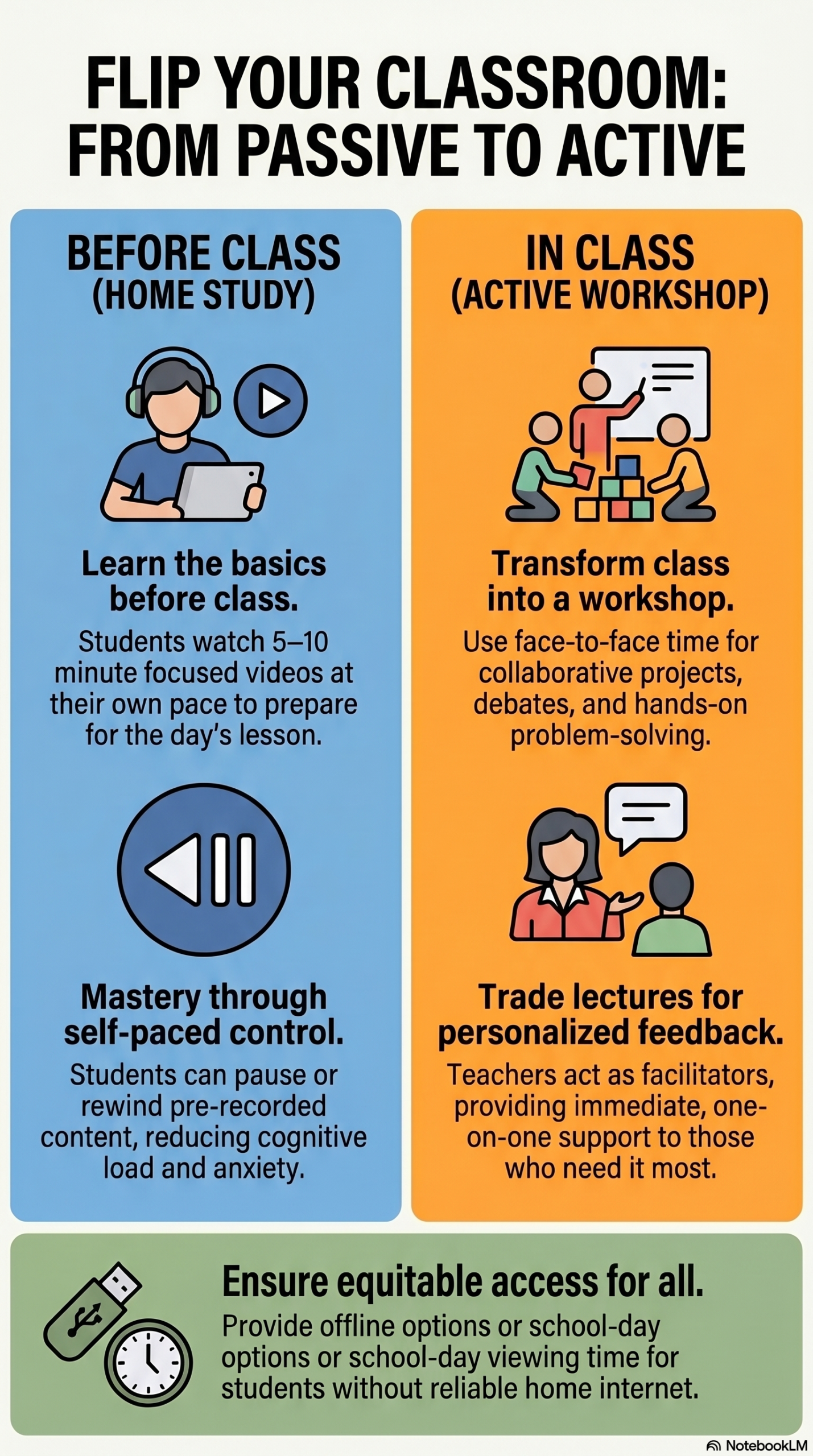
The “flipped classroom” model redefines the traditional teaching dynamic by shifting direct instruction—the “lecture”—to an individual, asynchronous format, allowing in-class time to be dedicated to active, collaborative learning.
1. The Flipped Dynamic
In a flipped environment, the role of “homework” and “classwork” is reversed. Students engage with new content before coming to class, while classroom time is reserved for applying that knowledge.
- Asynchronous Preparation: Students watch short, pre-recorded video lectures or review instructional materials at their own pace outside of the classroom.
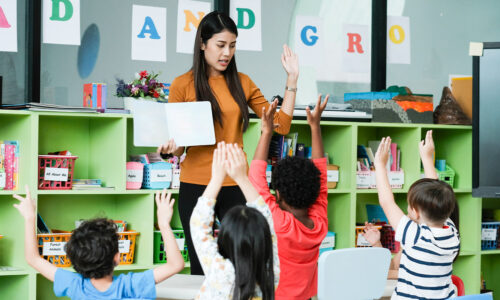
- Active Face-to-Face Time: Class sessions are transformed into workshops where teachers facilitate deeper exploration, group projects, and individualized support.
- Reduced Cognitive Load: Because students have already previewed the material, they are better prepared to engage in higher-order thinking during class rather than just passively listening to a lecture.
2. Best Practices for Implementation
| Strategy | Implementation Tip |
| Short, Focused Content | Keep pre-recorded videos between 5–10 minutes to maintain engagement and prevent fatigue. |
| Active Learning Tasks | Use class time for problem-solving, debates, or hands-on activities that require student participation. |
| Accountability Checks | Integrate simple quizzes or reflective prompts after the asynchronous content to ensure students are ready for the class activities. |
| Differentiated Support | Use the extra time gained during face-to-face sessions to provide one-on-one help to neurodivergent students or those needing additional support. |
3. Benefits for Diverse Learners
The flipped model is particularly effective for supporting a range of learning needs, including neurodivergent students.
- Self-Paced Control: Students who need more time to process information can pause, rewind, or re-watch video content, which reduces the anxiety of missing information during a live lecture.
- Immediate Feedback: Because in-class work involves practicing the application of concepts, teachers can provide immediate, real-time feedback to correct misconceptions as they happen.
- Social Connection: Flipped classrooms foster a collaborative environment where peer-to-peer interaction is prioritized, helping to build the social-emotional skills necessary for professional success.
4. Addressing Challenges
Transitioning to a flipped model requires careful planning to ensure all students are set up for success.
- Ensure Equitable Access: Not all students have reliable internet access at home. Provide offline options or time during the school day for students to view the pre-recorded content.
- Clear Expectations: Clearly communicate why the class is moving to a flipped model and how it will benefit their learning and engagement.
- Build the Foundation: Gradually introduce the model to allow students to adjust to the new workflow of preparing before they arrive in class.